

A conditional shortlist for feline care

Find the best insurance fit for your cat

Start with claim funding, long-term illness protection and the extras your cat would use, then compare suitable policies.

Owner using a laptop beside an orange tabby cat
✓ Policy-first ✓ Independent ✓ Useful checks
Direct answer
The best cat insurance is the policy that fits your cat’s medical history, your ability to pay the clinic and the care you want protected over time. Prioritize accident-and-illness terms and continuing care before routine perks.
What to know

Define “best” before comparing names

Can you fund the first bill?

If paying a large invoice while waiting for reimbursement would be difficult, make the clinic-payment arrangement an early filter.

Can you sustain renewal?

Choose a premium and deductible you can maintain, while allowing for future changes. Switching later may expose already-developed conditions to new exclusions.

Will a course of care remain usable?

Read annual limits, condition-specific restrictions, medicine and specialist terms together. One reimbursed visit does not settle the next period’s care.

Which extras matter for this cat?

Check examination fees, dental illness and preventive benefits separately. A long list of extras does not make weak medical coverage stronger.
What to know

Three starting points, each with a reason to check

Option Why it may fit What could change the decision
Trupanion Investigate if direct payment at a participating hospital or a lifetime per-condition deductible is important Confirm your hospital uses its payment system and the proposed contract’s eligible costs; separate conditions can require separate deductibles
Pets Best Investigate if adjusting optional accident-and-illness benefits is a priority Its current coverage page describes options affecting exam fees, medication and other benefits; compare the actual selection, not a plan nickname

This is a deliberately limited, unranked shortlist based on official product descriptions. We did not obtain personalized prices, test claims service or survey customer satisfaction. Availability, eligibility and the state version must be checked in the offer. Other insurers may suit your cat better.

Pet profile

For cats, look beyond a single emergency

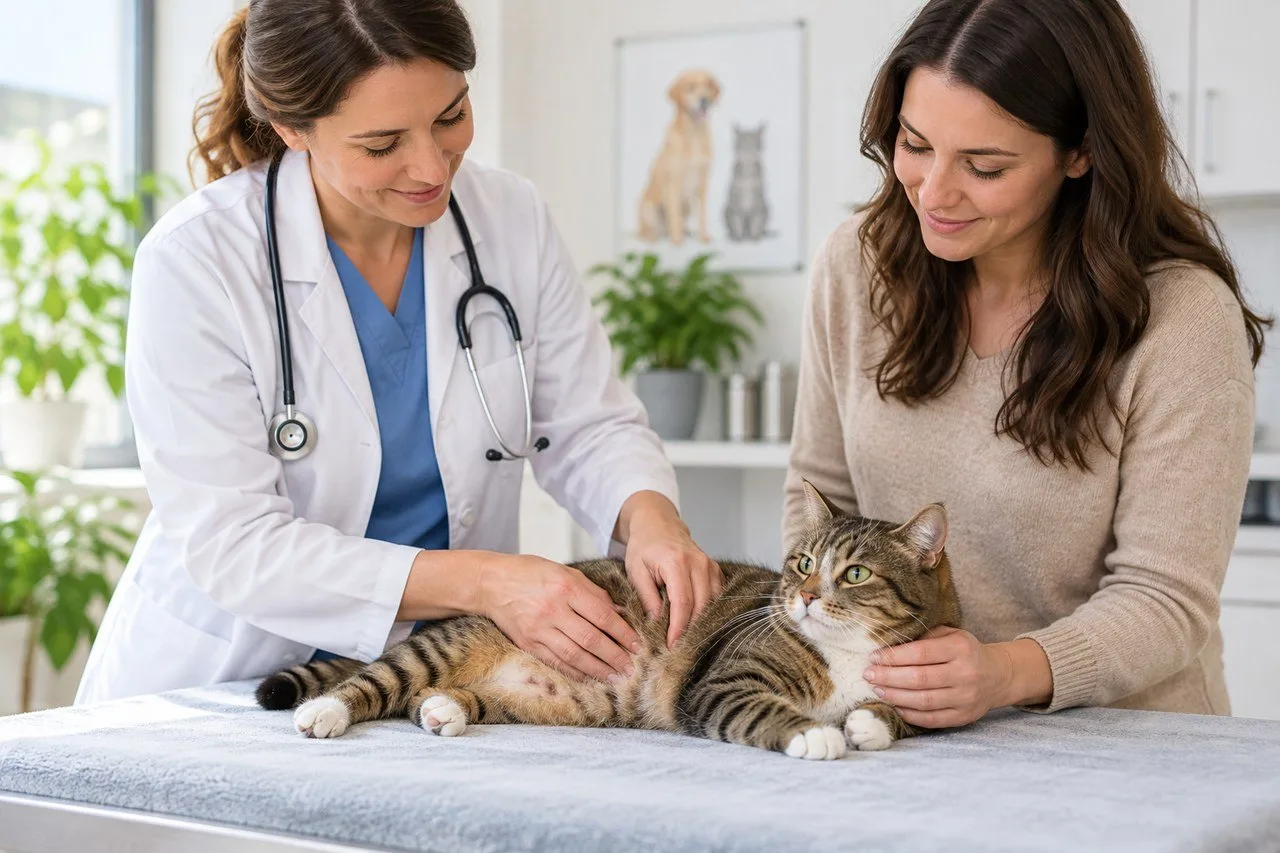
Veterinarian examining a tabby cat supported by its owner
A clinical discussion helps identify the care categories your cat may need; it does not decide insurance eligibility.

Cornell explains that chronic kidney disease can require ongoing evaluation and management, and early disease may not produce obvious signs. This is a reason to examine long-term insurance mechanics, not a prediction that your cat will develop it.

For a policy under consideration, ask how an eligible illness developing while insured would be treated across renewal: repeat tests, prescribed medicine, specialist consultations and any recommended diet. These are separate expense categories. “Illness covered” does not establish that every related purchase qualifies.

Do not use a quiet indoor lifestyle as proof that illness protection has no value. Equally, do not buy on the assumption that a new policy will fund an existing diagnosis. A veterinarian’s records and the policy’s pre-existing-condition definition remain central.

Policy mechanics

A deductible structure can favor different histories

Trupanion describes a lifetime per-condition deductible: once the deductible for an eligible condition is met, it does not reset annually for that condition. That feature can matter for repeated treatment, but a different condition can have its own deductible. It is not a statement that pre-existing conditions become covered.

An annual deductible pools eligible expenses within the policy’s annual accounting period instead. When comparing these structures, ask for a worked example involving one continuing condition and then two unrelated conditions. Do not compare the printed deductible amounts as if they mean the same thing.

Also confirm the share you continue paying after the deductible, the treatment of exam fees and any payout ceiling. A low deductible does not make an excluded charge payable, and “no payout limit” does not mean every service is included.

Pet profile

Make the final choice from the actual cat’s offer

  • Enter the same age, breed or mix, address and requested start date for each quote
  • Disclose prior symptoms, diagnoses and treatment accurately
  • Remove any option that cannot meet your essential payment or coverage need
  • For the remaining offers, compare the complete annual price with selected extras
  • Keep the sample policy, endorsements and written answers before accepting

If your cat is already insured for an ongoing condition, assess what you might lose before replacing that policy. If the cat is older, new-enrollment restrictions deserve attention before you spend time comparing benefits.

The winning offer should have a clear explanation in your own words: “This meets my funding needs, keeps the medical benefits I value, and remains affordable with the deductible I chose.” A rating badge or an unusually cheap first quote cannot provide that explanation for you.

Evidence

Sources and policy context

Public references support the consumer and veterinary context. Named product details were checked in official insurer materials; the policy offered for your pet and state controls actual coverage.

Next step

Compare Current Pet Insurance Rates

Check current options for your pet and location, then compare the policy details, exclusions, costs, and eligibility before choosing.

Compare the policy before you choose Check the actual offer, exclusions and out-of-pocket terms.
See Rate Options